
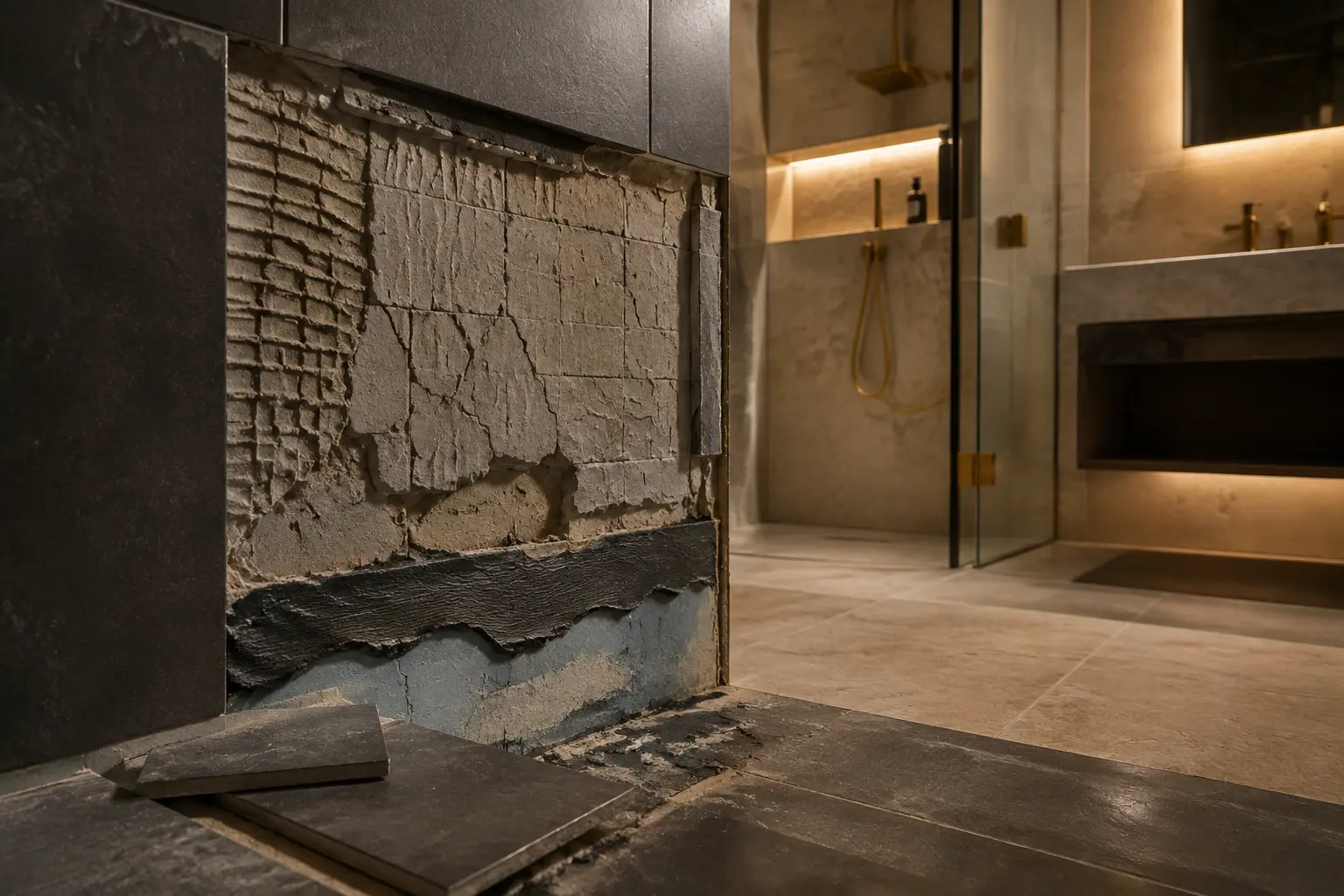
Three quotes for the same project are on the table. One is noticeably cheaper, promises a shorter timeline and fits the total price onto half a page. At first glance, it looks like the clear winner. Yet a construction quote is not simply a figure on the final page: it is a description of what the contractor will do, which materials will be used, in what sequence and on what assumptions. If those details are missing, you are not comparing prices for the same job.
In Istria, the differences between existing properties can be considerable, even within the same town. A house in Rovinj’s Old Town presents very different logistical demands from a detached property near Buje, while renovating an apartment in Poreč comes with different access constraints from working on a house outside Umag. Parking, material deliveries, waste removal, the condition of the structure, moisture and access to services all affect execution. A serious quote translates those circumstances into a clear scope and verifiable line items.
The lowest initial price is therefore not necessarily the lowest final cost. The following nine red flags will help you distinguish a genuinely competitive quote from a document that shifts risk onto the client. The aim is to find a quote whose price, quality and allocation of responsibility you understand before work begins.
1. There Is a Total Price, but No Detailed Bill of Quantities
A quote that provides only a total price or a handful of broad categories does not contain enough information for a sound decision. A line item such as “complete bathroom renovation” does not reveal whether it includes demolition, protection of access routes, rubble removal, substrate preparation, waterproofing, adhesive supply, tile installation, grouting or final sealing. Two quotes with the same heading may cover entirely different work.
A well-prepared bill of quantities divides the work into logical packages and, where applicable, states the unit of measurement, quantity, unit price and total value. Lump-sum items should specify exactly what they cover. This allows you to check whether an important stage is missing, understand the effect of quantity changes and later reconcile completed work with the amount invoiced.
Ask for a quote that enables an independent third party to understand what will be done, in what quantity and what the price includes.
2. The Scope of Work Relies on Assumptions and Verbal Agreements
Phrases such as “we’ll sort it out on site” and “that goes without saying” sound practical while everyone is still in agreement. Problems arise when the client and contractor interpret the same phrase differently. Does the demolition price include removing and lawfully disposing of waste? Does painting include skim-coating every wall beforehand, or only local repairs? Who makes good the openings left by new services? Without a written answer, both parties carry unnecessary risk.
The scope should be tied to the drawings, the description of the proposed work and the property’s actual condition. If the design documentation is not yet complete, the quote should clearly identify the information on which it is based and the items to be confirmed after opening up the structure or carrying out a further inspection. This is not a weakness in the quote; a clearly stated unknown is safer than false precision.
Before accepting the quote, prepare a list of included and excluded work. Cover supply, transport, unloading, installation, consumables, protection, testing, cleaning and documentation wherever they are relevant to your project. Anything that remains confined to a phone conversation will be difficult to prove later and even harder to price fairly.
3. “Turnkey” Comes Without a List of Inclusions and Exclusions
Turnkey can be a useful contracting model, but the term alone does not define what is included. One bidder may use it to mean building and installation work, another may include finishes as well, while a third may exclude sanitaryware, lighting, internal joinery or utility connections. If the boundaries are not recorded, an apparently complete quote can turn into a series of extras during construction.
Ask for a responsibility matrix: what the contractor supplies, what the client supplies and what is supplied by a third party. For items you procure, the document should state who receives, stores, carries in and installs them, and who is responsible for any damage during installation. For holiday homes, equipment ordered from outside Istria must also be coordinated with the construction schedule, because one delayed delivery can bring several trades to a standstill.
- A list of the work and materials included in the contract price
- A list of the work, equipment and fees not included
- A clear allocation of procurement, delivery, installation and protection
- A process for approving work that subsequently proves necessary
4. A Large Advance Is Required Without Being Tied to Procurement or Progress
An advance payment is not a red flag in itself. Before starting, a contractor may need to reserve specific materials, mobilise equipment or appoint specialist subcontractors. The risk arises when a substantial share of the total price is requested without explaining what it is for, what will be purchased with it or how it will be documented.
A safer model links payments to clear milestones: mobilisation, completion of a defined stage, materials actually delivered to site or a verified interim payment certificate. Each milestone must be objectively verifiable. “Half the work” is almost as vague as a single total price, whereas “first-fix services completed and the agreed testing carried out” gives both parties a concrete basis for payment.

5. The Completion Date Is Promised Without Phases, Resources or Conditions
An exceptionally short timeline is especially attractive to apartment owners who want to finish before the tourist season. But a date without an operational plan is not a programme; it is a wish. The quote should show the sequence of the main phases, their estimated duration, dependencies and the points at which the client must make a decision or supply equipment.
Ask how many people will actually be on site, which tasks will be handled by the contractor’s own team, which will be subcontracted and whether key dates have been coordinated with those subcontractors. It is also important to know whether the same team is running several sites in parallel. There is nothing wrong with a contractor having other projects; the problem is when the promised timeline assumes capacity that has not been planned.
Local conditions can further affect progress. Restricted access to the historic centres of Rovinj or Poreč, delivery windows, parking availability, tourist-season congestion and the weather can all alter productivity. A quote need not guarantee what no one can control, but it should state the key assumptions, explain how delays will be reported and set out how the programme will be updated.
A reliable timeline has phases, named responsibilities, dependencies and documented assumptions—not merely a completion date.
6. Materials Are Described Only as “Standard” or “Similar”
The price of a material says nothing by itself about its suitability. A waterproofing system, thermal insulation, mortar, adhesive or finishing paint must be appropriate for the substrate, the intended use of the space and the exposure conditions. Wording such as “mid-range material” makes it impossible to verify performance, compatibility or what will actually be installed.
Where a selection has already been made, the quote or an appendix should specify the manufacturer and product. If the brand has not yet been fixed, it should define at least the required technical performance and system. It is particularly important to treat components designed to work together as a complete system. An unauthorised substitution of a single product can affect the performance of the entire assembly.
The phrase “or equivalent” is meaningful only when there are criteria for equivalence and an approval process. Agree that, before making a substitution, the contractor will provide the technical data, reason for the change, effect on the price and timeline, and written sign-off from the responsible professional or the client, depending on the project. Sometimes the cheapest quote is cheapest precisely because the bidder has assumed products that the others did not consider acceptable.
- The exact product reference or minimum technical performance
- The expected quantity and associated consumables
- A method for verifying what was installed
- A process for approving substitute materials
7. Additional Work Has No Price or Approval Process
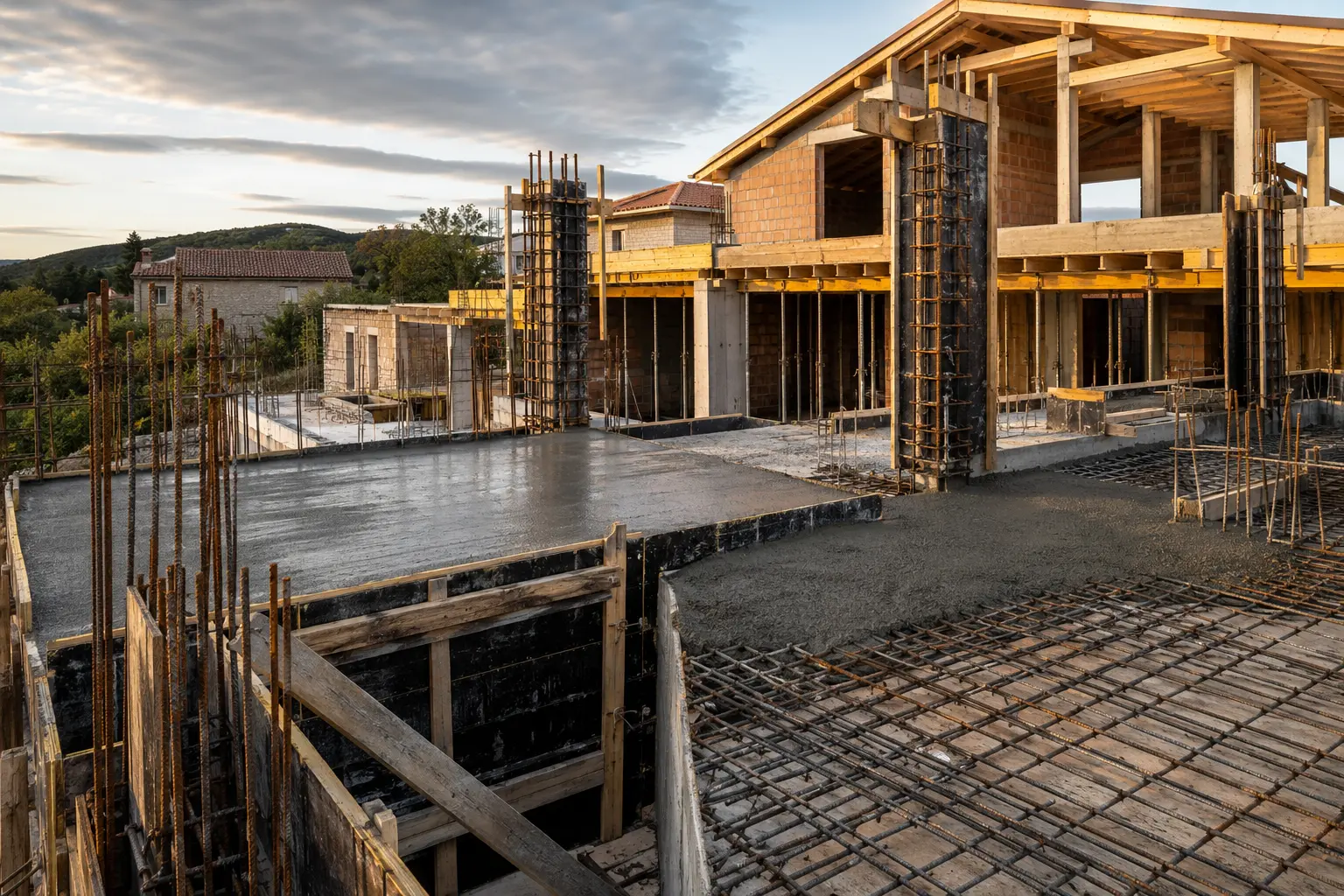
In a renovation, it is impossible to know every concealed condition before walls and floors are opened up. Even so, that does not justify an open-ended “additional work as required” item. The quote should explain in advance how variations will be recorded, who will assess them, what information will be provided to the client and when the work may begin.
It is useful to agree unit rates for likely variable quantities—for example, additional substrate preparation or treatment of newly exposed surfaces—where those items can be measured meaningfully. For entirely new work, the contractor should provide a written supplementary quote describing the work, its price and its effect on the timeline. A photograph of the condition found and a written record of the decision help prevent later disputes over whether the work was necessary and who approved it.
8. A Fixed Price Is Given Without Inspecting the Property and Substrates
A quick budget estimate can be useful at an early stage, but it is not the same as a construction-ready quote. If a bidder provides a fixed price for a complex renovation without visiting the property or reviewing the relevant drawings, they are probably assuming ideal conditions or leaving room for later adjustments. Neither gives the client genuine certainty.
A site inspection should assess access, storage options, protection of adjoining areas, visible cracks, signs of damp, substrate flatness, the location of services and the arrangements for waste removal. In coastal properties, exposure to salt and moisture may be important when selecting details and materials, while in older stone houses it is essential to understand how the existing construction allows moisture to pass through and drain away. Those conclusions cannot be drawn from a photograph alone.
The inspection should also produce a list of unknowns. Some may require measurements, an exploratory opening, a designer’s opinion or checks by a services contractor before a final price can be given. Sometimes the professional answer is, “We cannot price this reliably yet.” That qualification is worth more than an apparently precise figure that changes as soon as work begins.
9. The Contractor Avoids Contracts, Written Records and Clear Accountability
A quote is the beginning of a business relationship, not a substitute for agreed documentation. If a bidder insists that emails, contracts, written variation approvals and site records are needless bureaucracy, consider how a real problem on site will be handled. A sound written record protects both parties: it documents what was agreed, what changed and when each decision was made.
The documentation should identify the contracting parties, the property, scope, price or pricing method, payment schedule, deadlines, handover process, procedure for defects and variations, and responsible contacts. The additional documents and participants required will depend on the type and extent of the work, the design documentation and the applicable requirements. For specific legal or professional obligations, review your project with an appropriately authorised professional rather than relying on a generic online checklist.
If a straightforward question about responsibility is treated as a sign of mistrust, imagine the conversation when a delay, extra charge or defect arises.
How to Compare Construction Quotes Without Falling into the Lowest-Price Trap
Begin by giving every bidder the same project brief. Send the same drawings, photographs, material requirements and target dates. Then create a line-by-line comparison table rather than looking only at the total. Mark what is included, what is excluded, where quantities differ and where information is missing. A price difference becomes meaningful only after the scope has been normalised.
Alongside price, assess whether the timeline is achievable, the quality of the technical response, the payment model, the variation procedure and the clarity of communication. Record every assumption that could alter the final cost. Send each bidder one consolidated set of questions and ask for the answers to be incorporated into the quote or an appendix; this reduces the risk of the same verbal statement being interpreted differently later.
The best value is not necessarily the middle or the highest quote. It is the one that delivers the required result, a realistic plan and manageable risk at an acceptable price. If one quote remains more competitive after the scopes have been aligned, that may be a genuine advantage. Better organisation, an available team or stronger purchasing terms may explain it—but the difference should be explainable.
- Are the quantities, units of measurement and workmanship standards comparable?
- Are preparation, protection, transport, waste removal and final cleaning included?
- Are materials defined by a specific product or measurable performance criteria?
- Are there realistic phases, deadlines and payment milestones?
- Is the process for approving additional work documented?
- Have the unknowns been identified and assigned to a responsible party?
Conclusion
A sound decision is made before the first day on site.
A good construction quote does not pretend that a complex project is perfectly simple. It clearly separates what is known from what is unknown, shows what you are buying and sets out a process for situations that may arise during construction. The document may run to more pages and prompt more questions at the outset, but that is precisely what reduces surprises once work is under way.
If you are planning a new build or renovation in Rovinj, Poreč, Umag, Buje or elsewhere in Istria, you can send Tecton Grupa your drawings, bill of quantities and quotes for an initial project review. The purpose of the conversation is not to push you towards a decision, but to establish whether the scope, key assumptions and outstanding risks are clear enough for you to compare your options with confidence.
Send your project for reviewFrequently asked questions
Answers to have before construction begins.
Should the cheapest construction quote be rejected automatically?+
No. The cheapest quote may be a good one if, after the scopes are aligned, it includes the same work, comparable materials, a realistic timeline and a clear pricing method. The problem is not the low price itself, but a price that cannot be linked to quantities, responsibilities and outcomes. Ask for the difference to be explained, and decide only when you are comparing like with like.
What should a well-prepared construction quote include?+
For most projects, it is helpful to have a clear scope description, itemised work and quantities where known, material or performance specifications, included and excluded costs, the timeline and phases, the payment schedule, the validity period of the quote and the variation procedure. The appropriate level of detail depends on the work. For more complex construction projects, the quote should be based on suitable design and technical documentation.
How can you compare quotes when contractors use different line items?+
Create your own comparison table based on a single bill of quantities or scope description. Map each quote to the same categories, and mark blank fields as unknown rather than included. Send every bidder the same follow-up questions. If the differences are substantial, ask for revised quotes in a common format or obtain an independent professional review before deciding.
How can you protect yourself against unforeseen additional work?+
It is impossible to eliminate every unknown, especially when renovating an older property, but the process can be controlled. Before work begins, carry out the relevant inspections, record the initial condition and agree that every additional item will have a description, reason, price, impact on the timeline and written approval. Unit rates can be agreed in advance for likely, measurable quantities.
Why is a site visit important before issuing a final quote for work in Istria?+
A site visit reveals conditions that a brief enquiry cannot show: access to the property, storage space, substrate condition, damp, visible cracks, service routes and protection requirements. Logistics in the historic centres of Rovinj or Poreč may be entirely different from those around a house near Umag or Buje. An inspection does not eliminate every risk, but it turns those risks into specific questions and more realistic line items.