
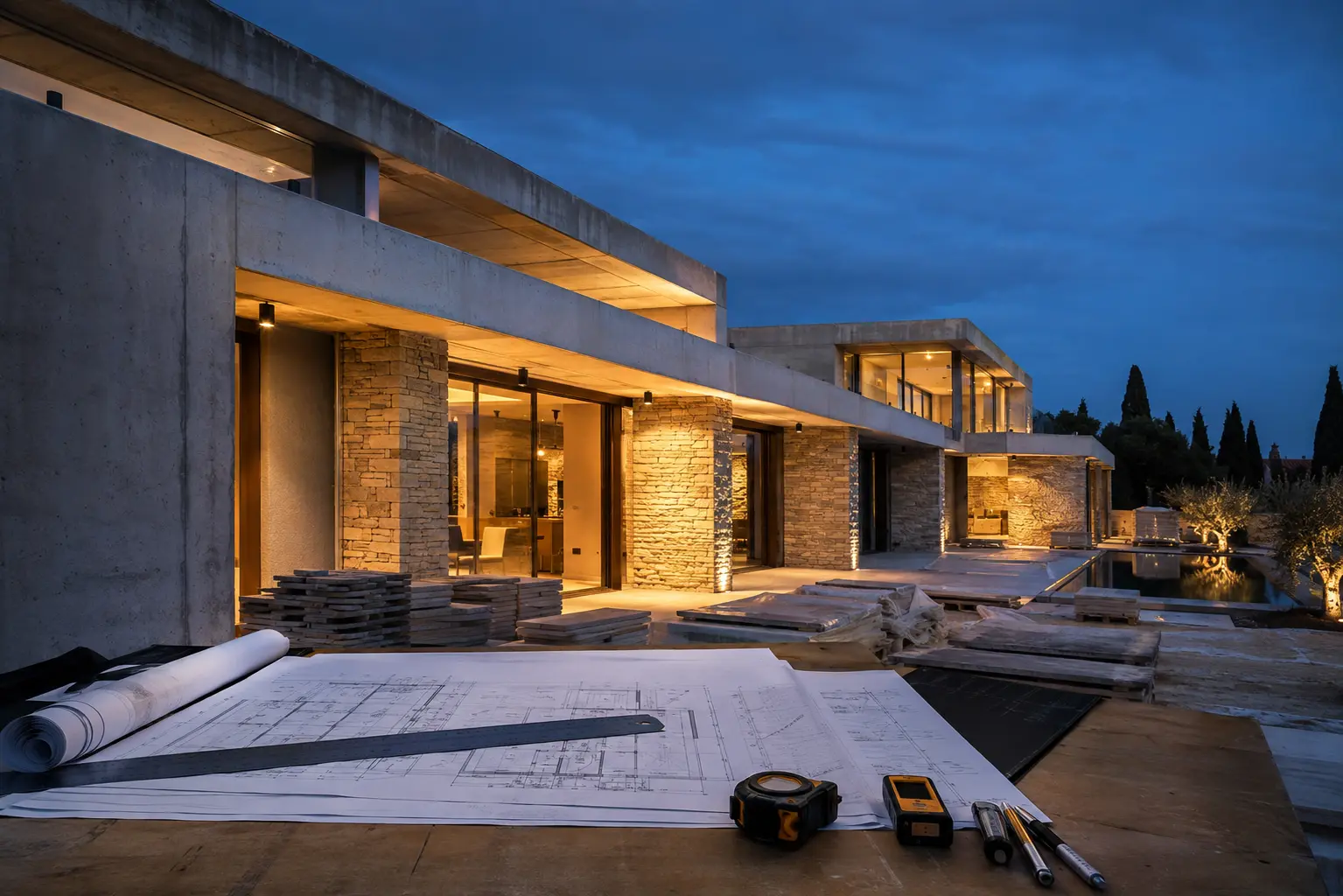
The term turnkey sounds straightforward: the house is agreed, the contractor takes responsibility for construction and the client ultimately receives a completed property. In practice, however, the term does not mean the same thing in every quote. One contractor may include floor finishes, sanitary ware and interior painting, while another may use the same label for structural work and basic installations only.
A sound decision therefore cannot be made by comparing total prices alone. When assessing turnkey house construction in Istria, compare the scope, quantities, material standards, deadlines, site-specific risks and the method used to price changes. Access to the plot, terrain configuration, distance from suppliers and exposure to moisture, salt and wind are particularly important.
Before the first payment, the quote must be precise enough for both parties to share the same understanding of what will be delivered. The following points help turn an attractive summary into a verifiable construction plan, without pretending that every unknown can be eliminated in advance.
Start by Defining Exactly What Turnkey Means in This Quote
The first page of the quote should identify where the contractor’s responsibility begins and ends. The starting point may be the handover of a prepared plot, or it may include site setup, setting out, earthworks and temporary utility connections required for construction. The end point may be a technically completed house, but not necessarily landscaping, fencing, a swimming pool, a kitchen or connections to public utility networks.
Request a list of stages: preparatory works and earthworks, foundations, structure, roof, external joinery, façade, electrical installations, water supply and drainage, heating and cooling, plastering, screed, tiling, flooring, painting and decorating, internal doors, sanitary ware and final testing. Each stage should be marked as included, partly included or excluded.
A list of what the price does not include is equally important. Design, construction supervision, surveying services, fees, utility connections, temporary electricity and water, removal of excess excavated material, landscaping and final cleaning are often contracted separately. Exclusions are not a problem when they are visible; the problem begins when the client discovers them only after work is under way.
If an item is neither expressly included nor excluded, request written clarification before payment and add it to the final quote or contract.
The Quote Must Refer to a Specific Design and Bill of Quantities
The same house shown in a sketch can have a substantially different structure, specification and level of construction complexity. The quote should therefore state the reference and date of the design documentation on which it is based, as well as the version of the bill of quantities. If the design changes later, it must be possible to distinguish the original scope from a subsequent client request or a necessary adjustment.
The bill of quantities should contain measurable items: unit of measurement, anticipated quantity, unit price and total amount. Lump-sum packages may be appropriate for certain well-defined works, but a single item such as complete house provides no way to verify what has actually been priced. Where quantities are estimates, the method for determining the final quantity should be explained.
Check which floor-area definition is used for any price-per-square-metre figure. Gross, net, calculated and usable floor areas are not the same basis. Terraces, canopies, garages and storage rooms may be counted differently, so two apparently identical prices per square metre may not cover the same building.
- reference and date of the design on which the quote is based
- version of the bill of quantities and drawings attached to the quote
- units of measurement, quantities and unit prices for key items
- the floor-area basis used for every calculation per square metre, clearly stated

A Material Name Is Not Enough Without a Class, System and Workmanship Standard
Descriptions such as quality tiles, premium joinery or a modern heat pump are not technical specifications. The quote should define the essential properties, intended system or reference range and, for finish products, the included purchase allowance. This tells the client what surcharge to expect when selecting a more expensive tile, tap or parquet floor.
For the building envelope, consider the system rather than a single product. Wall thickness, thermal insulation, adhesives, reinforcement mesh, finish render, plinth detailing, sheet-metal detailing and window installation all contribute to durability. At coastal locations around Rovinj, Poreč and Umag, exposure to salt, wind-driven rain and strong winds should be considered by the designer; the same detail should not be applied automatically to every plot.
The quote should also explain the product-substitution process. If a specified material becomes unavailable, a replacement should not be installed without a documented proposal, a comparison of relevant properties and approval by the client or responsible professional where required. This prevents availability from becoming a pretext for an unverified reduction in quality.
Account for the Plot’s Actual Conditions in Istria
Cost is not determined by the house’s floor area alone. A plot on the flat terrain of western Istria, a steep inland site and a narrow urban plot in an older part of a settlement present very different logistical demands. Access for lorries and a concrete pump, space for a crane, temporary storage, protection of neighbouring buildings and delivery arrangements can all affect both cost and programme.
Ground information must be related to the designed foundation solution. Rocky ground may require more demanding excavation, while fill, groundwater or lower bearing capacity may call for additional measures that should not be guessed without professional data. The quote should state which available information was used to estimate excavation and how a condition that could not objectively be confirmed before the ground was opened will be priced.
In Buje and other inland locations, the slope and retaining structures may be important; at coastal sites, careful selection of exposed metal components and waterproofing details is often a greater concern. These are not universal statements for every plot. A sound contractor’s calculation follows from the design and an inspection of the specific site.
A quote prepared without inspecting the plot and without clear assumptions can only be an initial estimate, not a reliable basis for a final contract price.
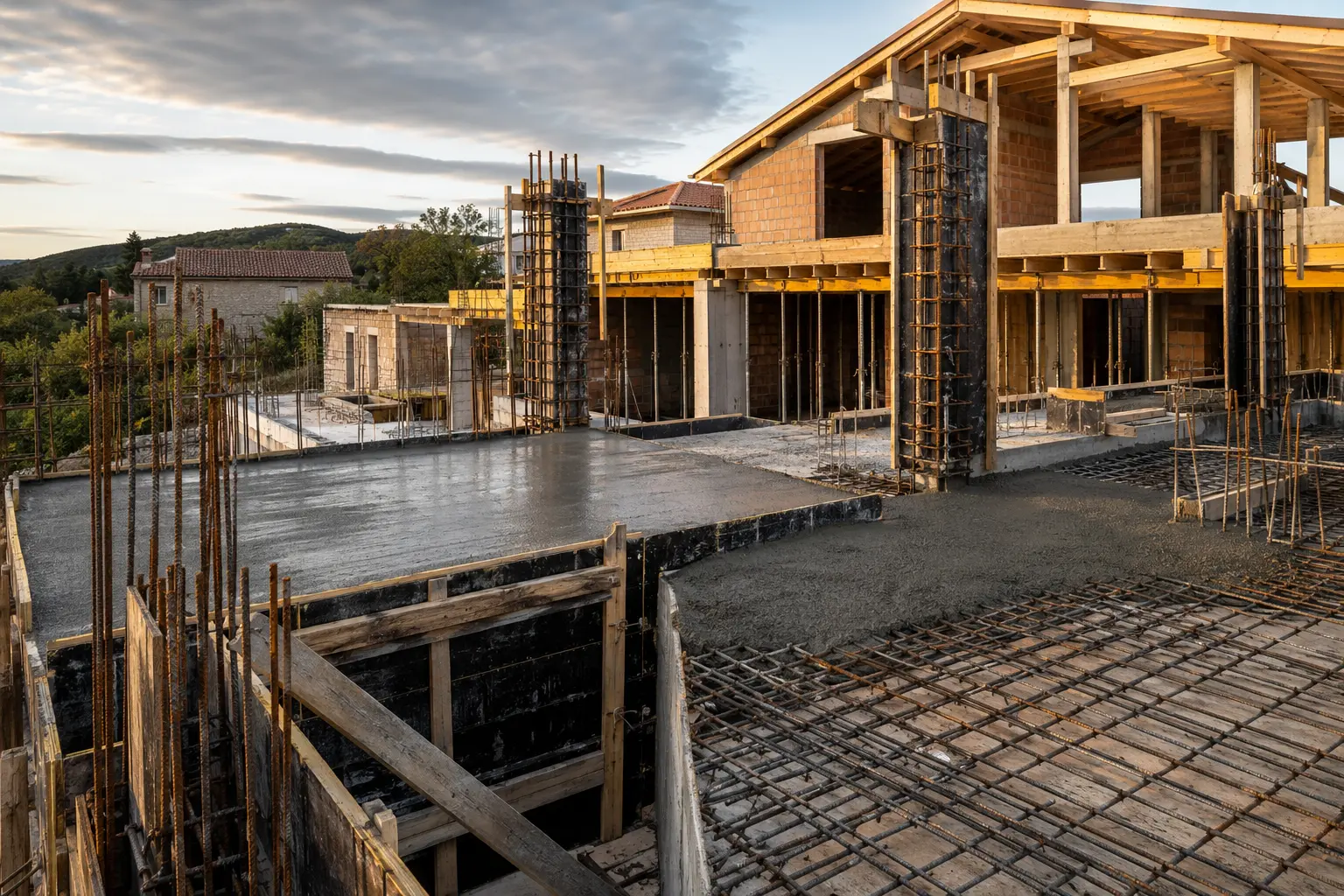
Separate the Fixed Price, Estimated Quantities and Potential Additional Works
The total should clearly show whether VAT is included and how long the quote remains valid. Contractually fixed items must be distinguished from those that depend on the quantity actually completed or on a later product selection. If the price of a particular material is valid only until a specified procurement deadline, that condition must be clearly visible before signature.
A change is not merely an addition. Moving an opening, choosing a different tile format, introducing a more complex installation layout or selecting equipment late may require demolition of completed work, additional labour and an extension of time. The process should therefore be simple: describe the change, identify its effect on price and programme, obtain written approval and only then carry out the work.
A provisional sum or reserved allowance may be used for unknown items, but it must explain what it covers and how the final amount will be reconciled. Such an allowance is not the same as a guaranteed final price. The client should be able to track the original budget, approved changes, omissions and additions, and the outstanding balance without searching through messages and verbal agreements.
- total price with the tax treatment clearly identified
- quote validity period and any price-adjustment conditions
- items priced according to actual quantities
- the procedure and authority for approving additional or varied works
A Deadline Is Not One Date, but a Series of Interdependent Commitments
The quote should state when the contractor can start, which conditions must first be met and how long the principal stages will take. A realistic programme allows for technical waiting periods, drying times, ordering joinery and equipment, coordinating subcontractors and weather conditions. A single completion date without intermediate milestones makes delays harder to identify early.
Seasonal pressures in Istria can affect worker accommodation, traffic and the availability of certain services, while heat, rain or wind may limit particular activities. This does not justify open-ended extensions, but it does call for a reasonable programme that defines the circumstances in which time may be extended and the process for reporting a delay.
The client also has deadlines: approving samples, selecting sanitary ware, supplying kitchen information or authorising a change. The quote or its appendices should include a schedule of key decisions. If a product must be ordered ten weeks in advance, a selection made in the final week cannot be without consequences for the programme.

Link the Payment Schedule to Verifiable Progress, Not Dates Alone
An advance payment may fund mobilisation or material orders, but the quote should explain its purpose and how it will be credited against later interim valuations. Subsequent instalments are best tied to completed and verified stages, such as the completed structure of a particular storey, a weathertight roof or installations finished to the agreed scope.
Each interim valuation should show completed quantities or percentage progress, amounts previously paid and the remaining balance. This allows the client and construction supervisor to verify the basis for payment. Site photographs can be helpful, but they do not replace proper valuation and quality control.
Final payment should also be agreed: which documents, inspections and remedied defects must precede the due date. A reasonable completion mechanism is not intended to exert pressure on the contractor; it ensures that both parties agree when the contracted scope has genuinely been delivered. Final terms should be tailored to the specific project and reviewed before signature.
Before each instalment, it must be clear which stage has been completed, who certifies it and how defects that do not prevent other works from continuing will be recorded.
Agree the Evidence of Quality While the Work Is Still Visible
Many critical layers are later concealed: reinforcement is encased in concrete, waterproofing is covered and installations disappear beneath plaster and screed. The quote should therefore provide for inspection points before work is covered, photographic records where useful, and reports or test results required by the design and the type of installation.
Specify who supplies technical data sheets, declarations and instructions for installed products, and the format in which they will be handed over at completion. For equipment, a record of models and serial details is useful, together with commissioning and maintenance instructions. The extent of documentation depends on the system installed, so it should be listed rather than assumed.
Professional construction supervision has a distinct role and should not be reduced to a formality. The quote should allow inspections to be coordinated without bringing the site to an abrupt halt. An agreed communication process between the client, supervisor, designer and contractor reduces the risk of a technical issue remaining in a private message without a clear decision.
Set Out Handover, Defects and Warranties Before Work Begins
The quote or contract should describe the final inspection process. A handover report listing identified defects, the responsible party and agreed rectification deadlines is useful. Minor finishing defects should be distinguished from problems that prevent the safe or contracted use of a particular system.
Warranty terms should be set out in writing by type of work and equipment, together with the reporting procedure. Do not assume that every installed product and every construction activity carries the same period or the same conditions. It should also be clear whether a fault in manufactured equipment is reported to the supplier or a defect in installation to the contractor.
Handover includes delivery of the keys, agreed technical documentation, instructions, equipment records and the final account. If the house includes more sophisticated heating, cooling, ventilation, pool-plant or automation systems, a demonstration of their operation should be provided for. A well-defined handover is the final stage of the project, not a casual meeting after the trades have left.
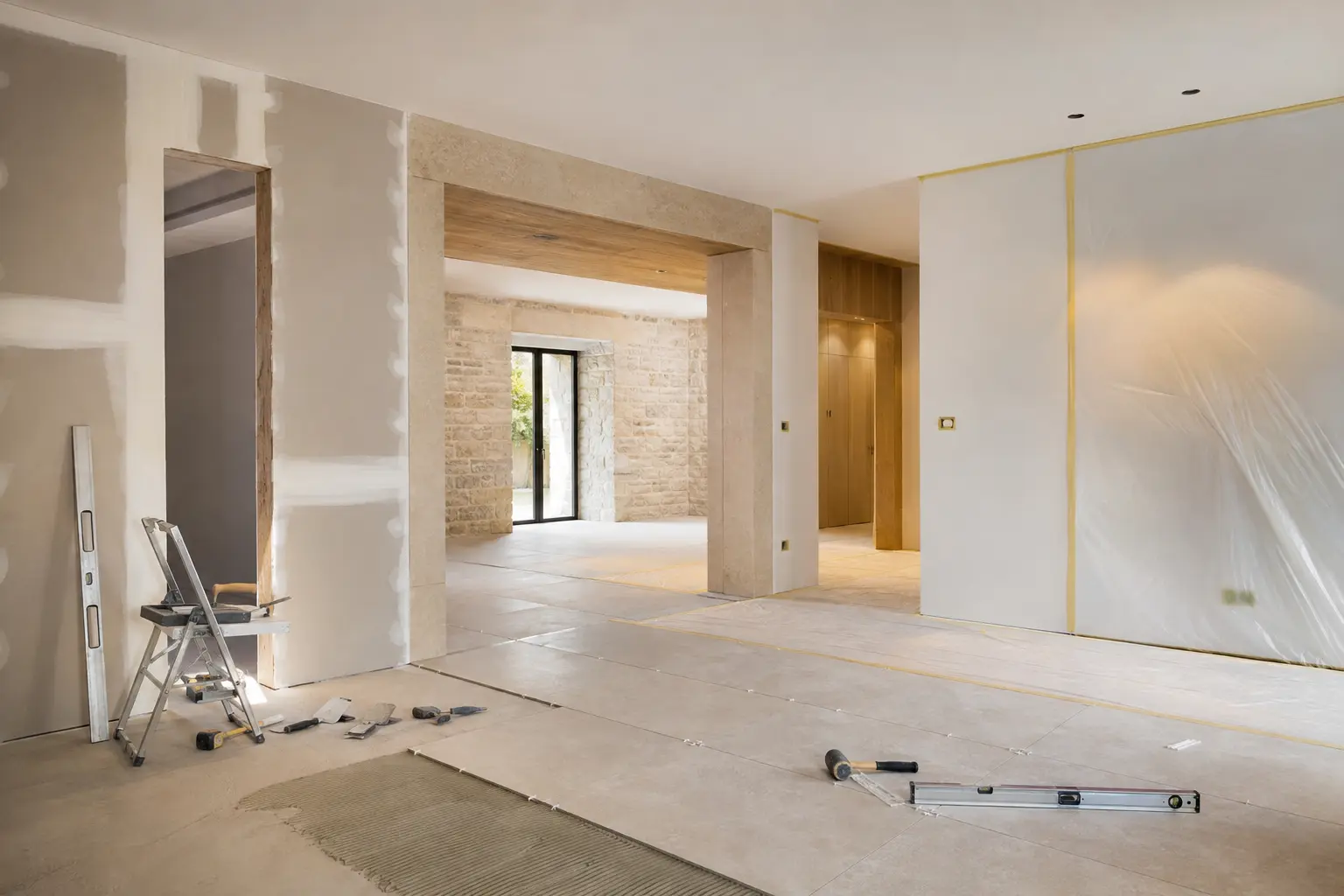
Conclusion
A sound decision is made before the first day on site.
A sound quote for turnkey house construction in Istria is not the one with the most technical terminology. It is the one that lets the client answer five questions: what is included, what is excluded, how much will be paid and when, when the house will be handed over, and what happens if the scope changes. The clearer those answers are before the first payment, the less room there is for costly misunderstandings during construction.
Before signing, compare quotes item by item, relate them to the same design revision and request clarification of every assumption. Involve the appropriately licensed professionals in technical, contractual and financial decisions. A few extra days spent refining the quote will usually be worth more than a quick start built on unclear foundations.
Send your project for reviewFrequently asked questions
Answers to have before construction begins.
Is a price per square metre enough to compare quotes?+
No. It can serve as an initial indicator only if the scope, specification, floor-area definition and site conditions are the same. To make a decision, compare bills of quantities, exclusions, materials, deadlines, the method for valuing quantities and the change procedure.
Should a turnkey quote include design services and permits?+
Not necessarily. Some models include them, while others begin once the documentation is complete. The important point is for the quote to state expressly who engages and pays the designers, surveyor, construction supervisor, required approvals, fees and utility connections.
What should happen if a material in the quote is no longer available?+
Agree a written substitution proposal that compares the essential properties, price and effect on the programme. The replacement should be approved before ordering and installation, with the designer or supervisor involved where the technical decision requires it.
How do you set a safe advance payment for building a house in Istria?+
There is no single amount suitable for every project. It depends on mobilisation, early orders and the agreed commercial model. More importantly, the purpose of the advance, the way it is credited and the subsequent instalments should be clearly linked to procurement and verifiable progress.
Can the quote be final before excavation begins?+
Many items can be contracted for a fully defined scope, but ground conditions and concealed circumstances can sometimes remain uncertain. The quote should state the available information, assumed quantities and a pre-agreed method for measuring and approving justified variations.