

Choosing a contractor is one of the decisions that has the greatest impact on the course of a construction project. A polished website, a prompt response and an attractive initial price can all be positive signs, but on their own they do not show whether a company can coordinate people, procurement, subcontractors, quality control and documentation at your site.
When looking for a construction company in Istria, you should assess not only its experience but also its understanding of the terrain and logistics. Access to a plot in Rovinj or Poreč, seasonal traffic around Umag, a sloping site near Buje, and exposure to wind and sea spray may all call for different solutions. Local experience matters only when it is reflected in a specific plan, not offered as a general claim.
The following 15 questions are not intended as a test with preferred marketing answers. Ask for documents, examples of procedures and clearly acknowledged limitations. Professionalism is often most evident in how precisely a contractor explains its assumptions, risks and what it cannot yet know with confidence.
1. Which Comparable Projects Have You Completed, and 2. What Exactly Will You Take Responsibility For?
Do not ask only for a list of houses. Ask which two or three completed projects are comparable in structure, size, terrain and standard of finish. A villa with a basement on a sloping site is not the same reference as a single-storey house on a level, easily accessible plot. It is also useful to establish which work the company carried out with its own team on the reference project and which work it subcontracted.
Check references while respecting the owners’ privacy. Photographs from different construction stages, an anonymised sample bill of quantities or the contact details of a client who has expressly agreed to speak with you provide more insight than a single photograph of the finished property. Ask what was challenging about the project, how a change was handled and whether the company would execute the same detail differently today.
The second question establishes the boundaries of the proposal. Is the company taking responsibility only for the structural shell, for selected finishing works or for coordinating the entire build? Does the scope include earthworks, building services, the façade, windows and doors, landscaping, equipment procurement, waste removal and final cleaning? The name of a service package is not enough without a list of what is included and excluded.
- Ask for a genuinely comparable project, not merely a house with similar aesthetics.
- Verify the actual scope of work the company delivered on the reference project.
- Record the precise starting and finishing points of its service on your project.
3. Who Will Manage the Site, and 4. How Will Decisions Be Made and Recorded?
The name of the person in charge is more valuable than a general promise that the team will be available. Ask who will manage day-to-day coordination, schedule the crews, monitor the bill of quantities and receive reports of problems. Find out how many other sites that person is managing at the same time and who will cover for them when they are unavailable.
The roles of the client, contractor, designer and construction supervisor should not become blurred. The contractor may propose a construction solution, but any change affecting the design must undergo the appropriate professional review. Ask how the company arranges inspections before concrete is poured, building services are enclosed, waterproofing is covered or other work is concealed from view.
Agree on a single decision trail for all communications: coordination minutes, a daily or weekly report, and a register of open questions and changes. A phone call is quick, but any decision concerning price, materials or timing should be summarised in writing. A good system need not be complex; it must show who approved what and on the basis of which drawing.
If everyone is responsible for everything, in practice no one is accountable for the deadline, the decision or the next step. Ask for names, roles and designated deputies.
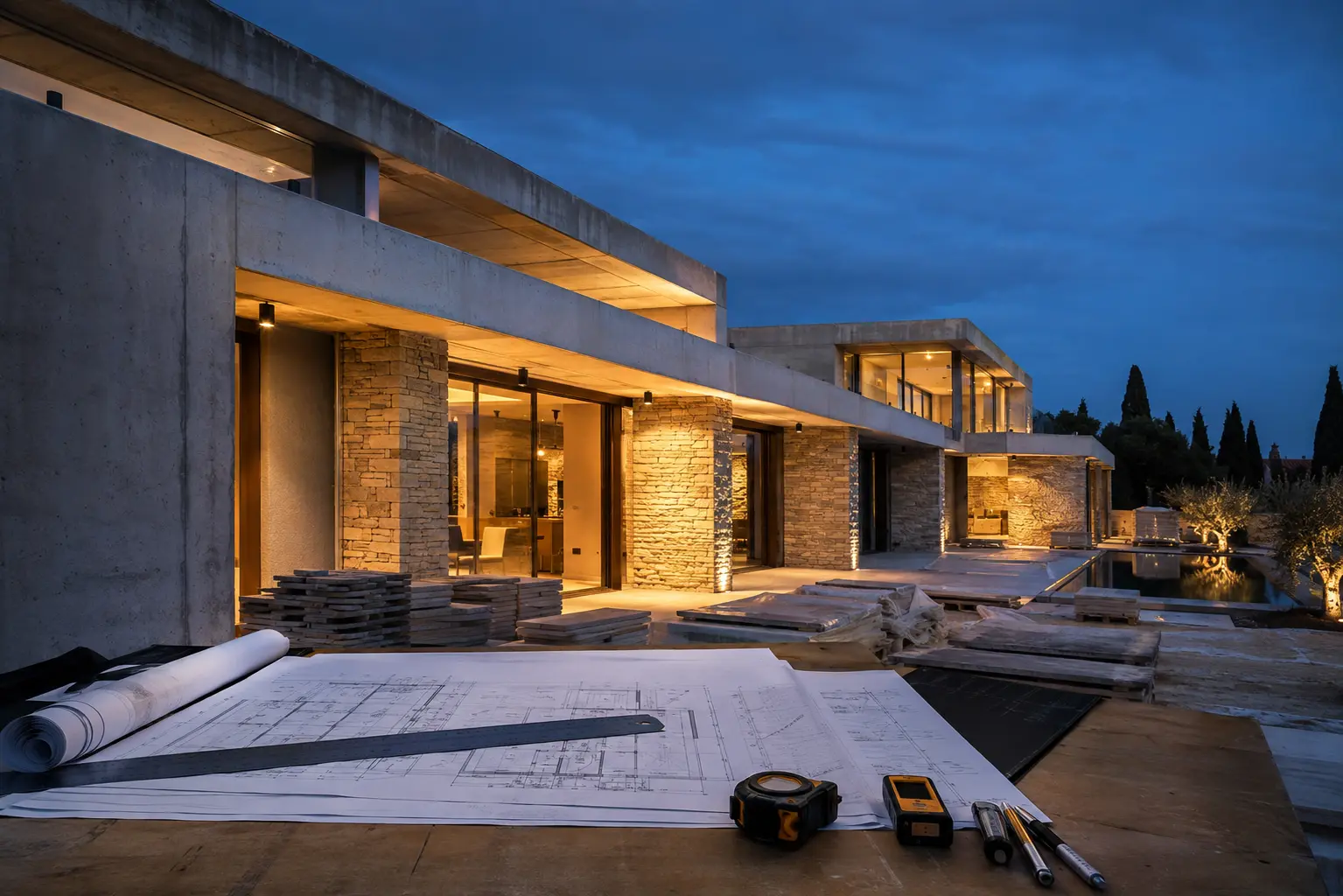
5. Do You Have the Capacity to Deliver, and 6. Which Work Do You Subcontract?
Availability is not the same as the ability to start promptly. The company should be able to explain when the key crew will arrive, how long each phase will take and which prior decisions it depends on. An overly ambitious completion date may indicate that procurement lead times, required curing and drying times, building-services coordination or weather conditions have not been factored in.
Ask for an outline programme showing the main phases and their dependencies. Pay particular attention to long lead times for windows and doors, roofing elements, heat pumps, sanitaryware and selected finishes. The programme should also show the client’s deadlines for selections; a delayed product decision can push back several later crews.
Using subcontractors is not a weakness if they are qualified and well coordinated. Ask which trades are covered by the permanent team, who appoints and pays the other contractors, who checks their work and whether your construction company remains your single point of contact. Also ask about the procedure if a planned subcontractor becomes unavailable.
- number of active sites and availability of the key crew
- planned start date, phase durations and critical procurement items
- list of subcontracted trades and the person coordinating them
- contingency plan for material delays or a change of crew
7. Have You Inspected the Plot, and 8. Which Local Risks Have You Allowed For?
A serious final proposal requires more than the address and the floor area of the house. A site visit should cover access for lorries and a concrete pump, space for a crane and storage, the slope, neighbouring buildings, the possibility of protecting public areas, and the utility connections needed for the site. If ground information is unavailable, this should be openly identified as an assumption.
Conditions in Istria can change over short distances. Excavating rock, working beside an existing house, operating in a narrow street in a historic centre or building on an exposed coastal plot all affect the machinery and construction details required. The company need not know every hidden condition in advance, but it should show what it has inspected, what it has accepted as a known risk and how a genuinely unforeseeable discovery will be priced.
Also ask how work has been planned during periods of heavier traffic, extreme heat, rain or strong Bora winds. Current access and work restrictions must be checked for the specific location; no single rule applies across the entire county. A worthwhile answer connects the season to deliveries, material protection and sequencing, without promising that weather will never affect the programme.
Test local experience by asking: which three assumptions about this plot have you incorporated into the price and programme?
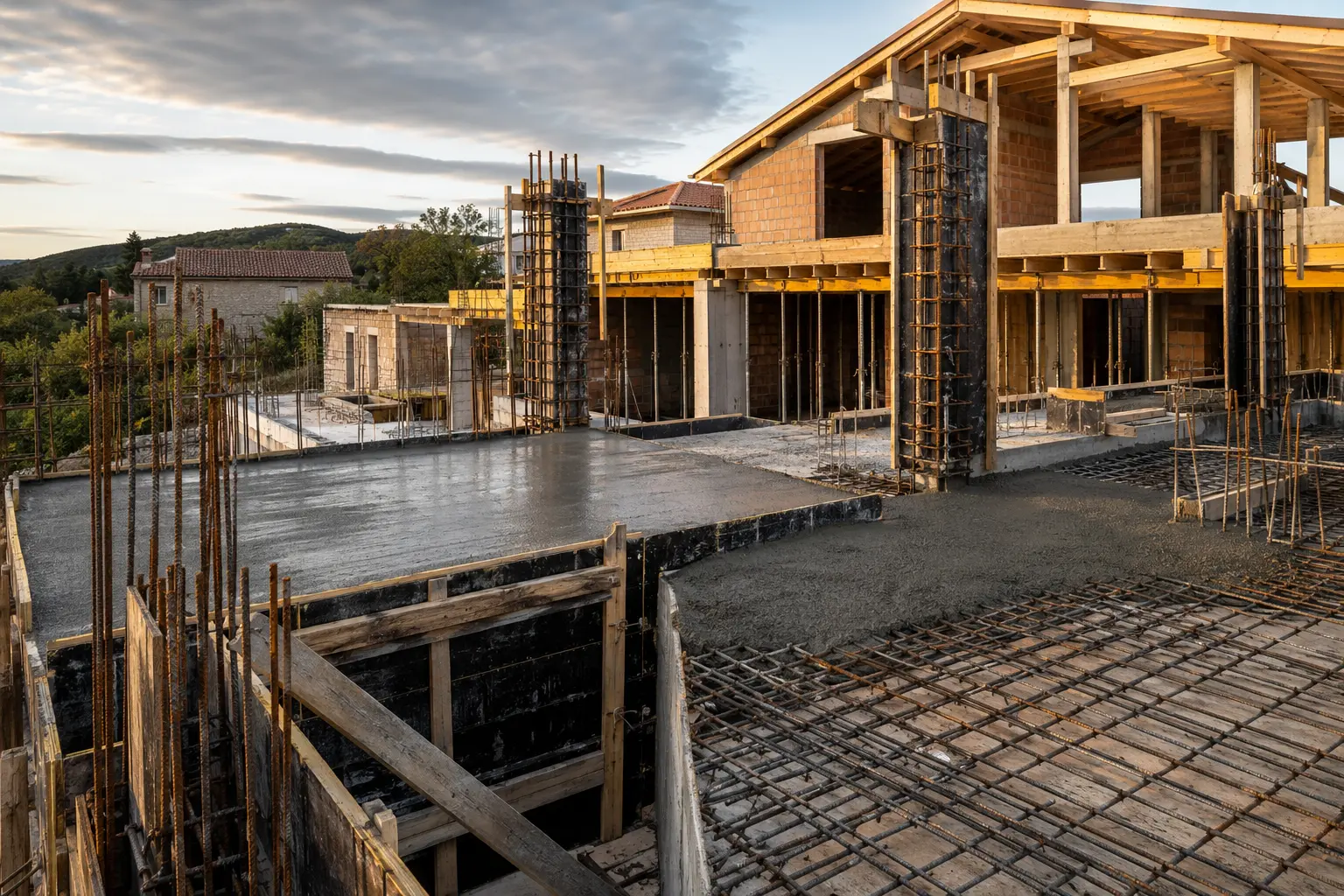
9. How Has the Price Been Built Up, and 10. How Will We Approve Changes?
The proposal should refer to a precisely identified version of the design and bill of quantities. For key items, ask for the unit of measurement, quantity, unit rate and total amount. It must be clear whether tax is included, how long the proposal remains valid, what is fixed, what will be charged according to the quantity actually completed and which costs are excluded.
Compare the basis used for floor area as well. Gross, net and usable floor areas do not provide the same denominator, while terraces, garages and covered areas may be calculated differently. A price per square metre is useful only when the scope, standard, area basis and site conditions are the same. Otherwise, it may conceal more than it reveals.
For changes, require a clear process: written description, reason, price or pricing method, effect on the programme, approval and only then execution. Urgent action to protect people or property may be necessary, but even such an event must be documented. A verbal request on site should not automatically become an open-ended additional charge.
- reference and date of the design on which the calculation is based
- quantities and unit rates for key works
- list of included and expressly excluded costs
- measurement rule for estimated quantities
- written procedure for additions, omissions and variations
11. Which Materials and Systems Do You Offer, and 12. How Do You Demonstrate Quality?
Descriptions such as standard tiles, quality insulation or premium windows and doors are not sufficient for comparison. The proposal should specify the technically relevant properties, system or reference product and, for finishes and fittings, the included supply allowance. Ask how the difference will be calculated if you select a more or less expensive product.
Pay particular attention to the substitution procedure. If a product is unavailable, the company should propose an alternative, compare the relevant properties, state the difference in cost and lead time, and request approval before installation. Near the sea or in locations exposed to wind, the selection of exterior metal components, fixings and finishing systems should reflect the design conditions rather than routine practice.
Evidence of quality should be gathered as the work progresses. Ask which inspection points the company provides before concrete is poured, drywall is closed, waterproofing is covered or building services are commissioned. Photographs, records, measurements and technical data sheets should relate to the actual phase and be available to the construction supervisor, not assembled only at the end when the layers can no longer be inspected.
The most useful answer is not merely a product brand, but a description of the entire system, the installation method and the inspection performed before the next layer conceals the work.
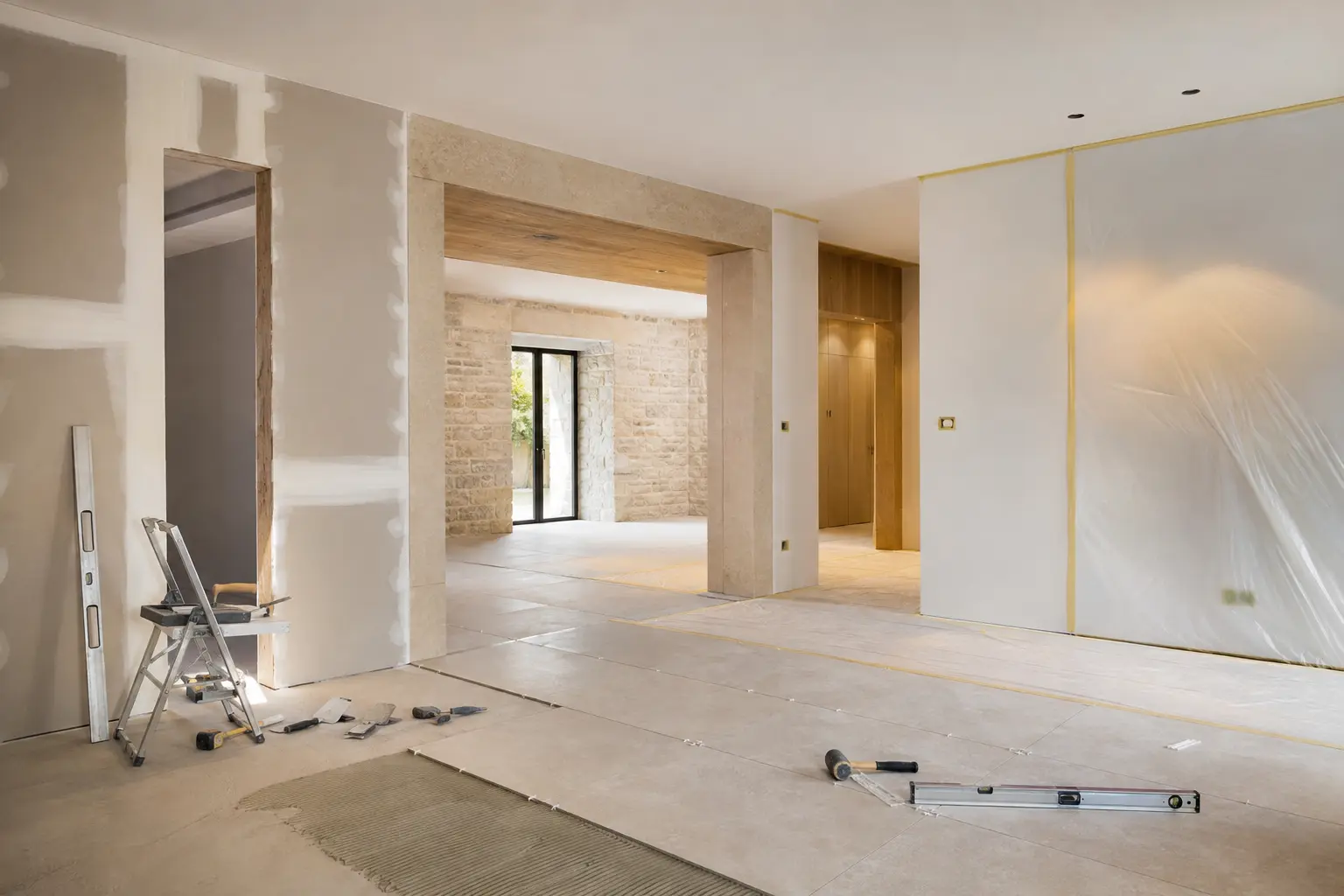
13. How Are Payments Certified, and 14. What Happens When the Programme Slips?
The payment schedule should follow verifiable progress. An advance payment may cover mobilisation or early procurement, but its purpose and the way it will be credited must be clear. Each subsequent progress claim should show the quantities completed or the phase finished, previous payments, approved changes and the remaining balance.
Ask who verifies the basis for each invoice and which supporting documents you will receive with it. A photographic report is helpful, but it does not replace a measurement sheet and professional inspection where these are required. For materials paid for in advance, clarify the order, storage, responsibility for damage and how that value will appear in the valuation.
The programme must define the conditions required for commencement, interim milestones and a notification procedure for delays. Ask which circumstances the contractor considers valid grounds for an extension, how it will demonstrate the impact and which recovery measures it proposes. Likewise, define the client’s deadlines for selections and approvals so that the cause of a delay is always clear.
- instalments tied to a measurable and inspected phase
- clear crediting of the advance payment and approved changes
- interim milestones for the structure, weather-tight enclosure and finishing works
- obligation to give timely written notice of risks to the programme
15. How Will Handover, Defect Rectification and Warranty Claims Be Handled?
Completion should not depend on a general impression that the house is mostly finished. Ask which documents and inspections precede handover, how the defects list will be compiled, who will set the rectification deadline and when the final account will be issued. A minor cosmetic defect and a problem that prevents the agreed use of the property are not the same category.
Warranty obligations should be described by type of work and installed equipment, without assuming that everything has the same warranty period or reporting channel. Ask for the contact details, the information required when submitting a claim and the expected inspection procedure. For equipment, clarify the relationship between the manufacturer’s warranty, the authorised service provider and responsibility for the installation itself.
At handover, it is useful to receive as-built drawings where contracted, technical data sheets, operating and maintenance instructions, test records, and a schedule of equipment models. The scope depends on the project and contract, so it should be agreed before work begins, while orderly collection of the information can still be organised.
How to Compare the Answers Without Relying on Instinct
Create a table with the 15 questions and, for each candidate, assess the completeness of the answer, the supporting evidence, the clarity of responsibility and the remaining risk. You do not need a complex formula. It is enough to mark each answer as confirmed, clarification required or unacceptable, with a link to the relevant document or meeting note.
Red flags include refusing to tie the proposal to a specific design, large unexplained lump sums, pressure to pay before the scope is clarified, material substitutions without approval, entirely verbal communication, and a completion date that disregards procurement and the required construction sequence. A single ambiguity may be resolved through clarification; a pattern of evading specific answers carries greater risk.
Look for signs of sound professional practice as well: a site visit before the final price, questions about the design, written assumptions, a realistic acknowledgement of unknowns, a structured cost breakdown, and a willingness to coordinate with the designer and construction supervisor. A company that raises a difficult issue early is often a safer partner than one that immediately promises there are no obstacles.
Make your final decision only once all candidates are responding to the same design, the same scope and the same list of questions.
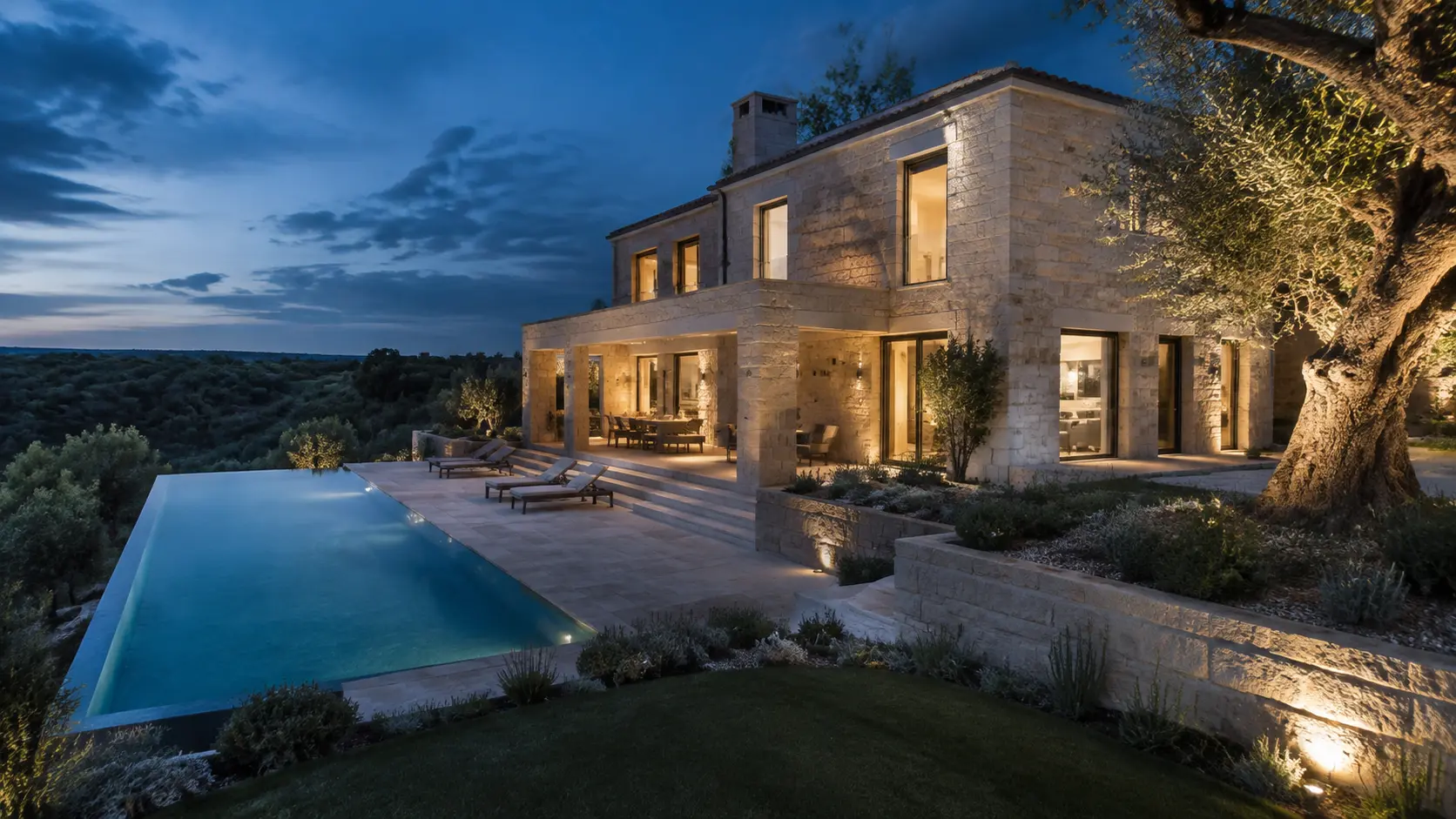
Conclusion
A sound decision is made before the first day on site.
A reliable construction company in Istria is identified not by a single slogan but by a series of verifiable answers. Relevant references, a named site manager, realistic capacity, a site inspection, a detailed proposal, quality control, clear payment arrangements and a clear handover process together provide a picture of the contractor’s capabilities and the risks involved.
Send all 15 questions to the candidates with the same version of the design, then turn their answers into appendices to the proposal or contract. The goal is not to find a company that claims nothing will change, but a partner that anticipates, documents and resolves changes without concealing their implications for price, quality and the programme.
Send your project for reviewFrequently asked questions
Answers to have before construction begins.
How Many Proposals Should I Obtain from Construction Companies?+
There is no magic number. What matters more is having enough comparable proposals and enough time for clarification. Three carefully prepared, detailed proposals often provide a better basis than numerous brief estimates that do not use the same design version and scope.
Is the Lowest Proposal Necessarily a Poor Choice?+
No, but the company should be able to explain why it is lower. The difference may arise from efficiency, but also from a narrower scope, different quantities, excluded costs or a lower standard. Compare the individual items and risks before comparing the total amount.
How Can I Check a Contractor’s References Without Compromising the Client’s Privacy?+
Ask for photographs from different stages, a description of the scope delivered, anonymised samples of documentation and contact details only for a person who has agreed to provide a reference. During the conversation, ask about communication, changes, timing and the way defects were resolved, not only about the final appearance.
Does a Construction Company Need Experience in the Same Town?+
Not necessarily, but it must understand the specific plot, access, supply logistics and exposure. Experience in Rovinj does not replace a site visit near Buje, just as general experience in Istria does not replace checking the current conditions in a particular area.
When Is It Too Early to Pay an Advance?+
Payment is risky until the contracting party, scope, price, programme, purpose of the advance and the terms for crediting it are clear. Before paying, check the final documents and, where appropriate, engage a technical or legal adviser to review the specific contract.